
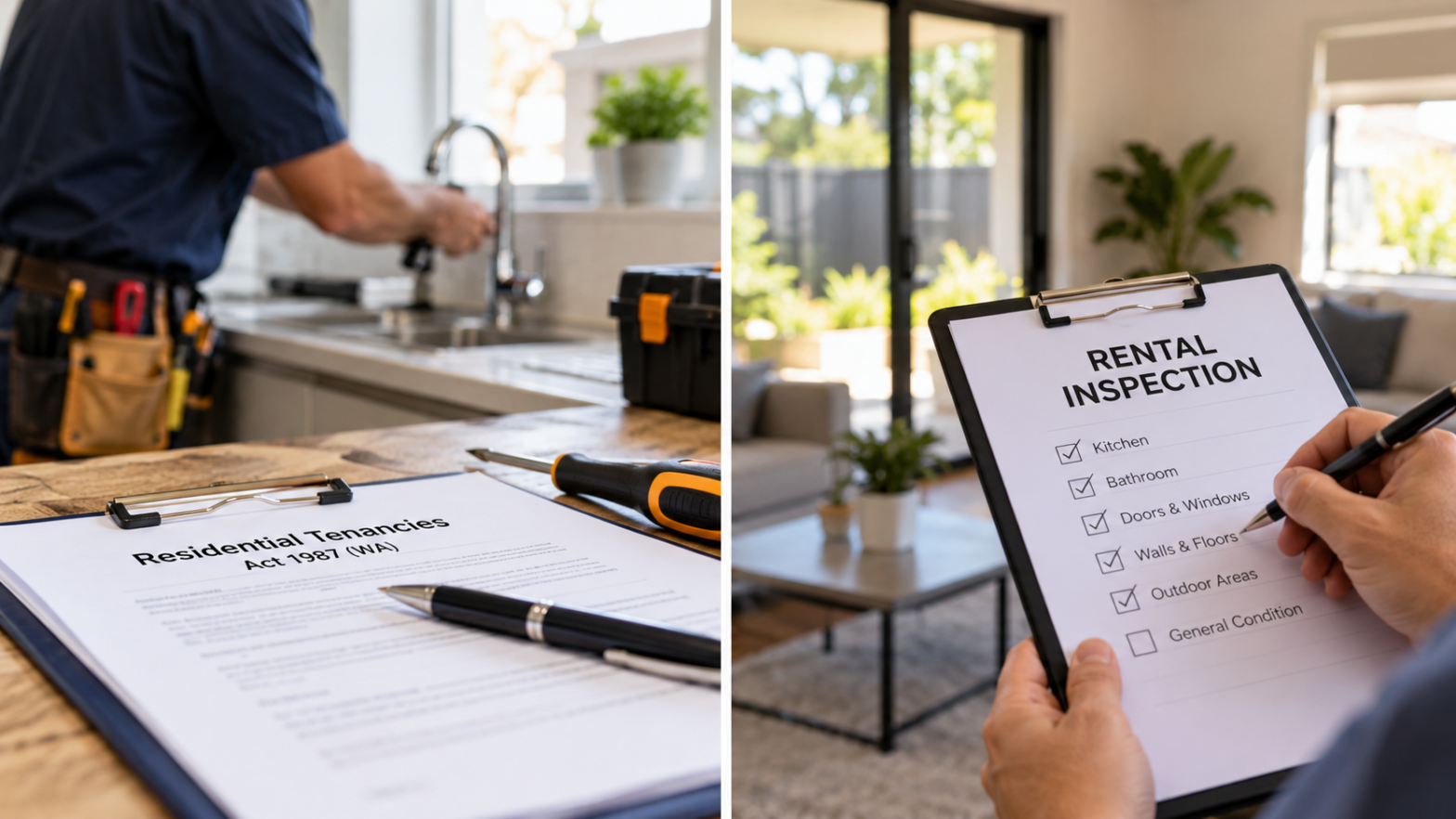
A number of residential tenancy agreements throughout Western Australia provide that a landlord has the entitlement to carry out a maximum of four routine inspections in any 12-month period (Section 46(3), Residential Tenancies Act 1987 (WA)).
There are, however, additional types of visits to a rental property that do not qualify as routine inspections. Examples of such visits are: a tradesperson coming to repair a broken door/window; a valuation; potential buyers looking at the property. Each of these visits would operate under its own set of regulations.
Landlords and/or their agents cannot arbitrarily describe one of their standard checks as something else just so they don’t breach Section 46(3) of the Residential Tenancies Act 1987 (WA).
So, if you have already had four routine inspections in the previous twelve months and your landlord/agent wants to schedule another inspection, you can reasonably ask them what the intended purpose of the inspection is. Should your landlord/agent fail to advise you as to the reason for the inspection, you may wish to request clarification of this issue directly from Consumer Protection WA.
Written Notification Required Prior to an Inspection
Under Section 46(2)(b) of the Residential Tenancies Act 1987 (WA), landlords/agents are obliged to provide tenants with written notification no less than 7 and no greater than 14 days prior to every routine inspection.
The notice provided must be prepared using Form 19 – Notice of Proposed Entry to Premises. The notice must include particulars of the intended purpose of the inspection, including the date of the intended entry and whether entry is expected prior to or subsequent to midday.
Saying “we will drop by tomorrow” via SMS is insufficient for providing written notification for a routine inspection. Although your landlord/agent may hold title to your rental property outright, you still enjoy certain statutory rights to privacy within your home.
Written Notification for Repairs / Maintenance
Notice requirements differ when it comes to non-emergency repairs/maintenance. Generally speaking, at least 72 hours’ written notice prior to entry is required. Emergency situations may necessitate immediate entry.
Additionally, you should be notified as to who will perform any repairs/maintenance, when they expect to attend at your property, and the reason for entry.
Further information concerning entry requirements can be found via Consumer Protection WA’s guidelines on rent inspections and privacy rights.
Permitted Times for Entry
Entry times for a landlord/agent are subject to restrictions pursuant to Section 46 of the Residential Tenancies Act 1987 (WA).
While routine inspections and maintenance are valid grounds for entry, emergency situations, showing a property to prospective purchasers or tenants, property valuations, etc., may also be valid grounds for entry, subject to the applicable rules.
Ordinary scheduled entry can occur at the following times:
- Weekdays: 8 am – 6 pm
- Saturdays: 9 am – 5 pm
- At times agreed upon by both parties
While it is feasible to schedule a routine inspection on a public holiday with your consent, failure to obtain your consent does not mean you must allow an inspection at that time.
Should you consider that a scheduled entry time presents undue inconvenience to you, the landlord/agent must make reasonable efforts to negotiate an alternative entry time that is more convenient to you.
This is particularly relevant where you have non-standard working hours. Irrespective of whether a property manager is acting on behalf of the owner, the rules discussed above remain applicable.
Must I Be Present at Home When the Landlord/Agent Conducts an Inspection?
No. You have the choice to be present when your landlord/agent conducts an inspection. You do not have an obligation to take time off work in order to facilitate a routine inspection. Therefore, even if you are absent from home at the time of an inspection due to being at work or elsewhere, as long as proper notice was served and all other applicable entry requirements were complied with, the landlord/agent may still gain entry into your rental property and complete the inspection.
Similarly, landlords/agents do not have authority to insist upon a tenant vacating a rental property merely because an inspection is taking place.
As mentioned previously, you should refrain from intentionally delaying or preventing a legitimate inspection that has been lawfully arranged. If you regard the timing of an inspection as inconvenient, please express your concern when you receive notice from your landlord/agent.
What Is Normally Involved in a Rental Inspection?
Normally, a rental inspection is quite simple. Your property manager or owner typically walks through your rental property and inspects its overall condition prior to reporting back on any matters that require attention. During an inspection, they will likely inspect most areas of your rental property including: doors/windows/walls/floors/bathrooms/kitchens/outdoor spaces adjacent to your home.
Some examples of typical things inspected during a rental inspection are:
- Overall cleanliness & condition of property
- Condition/damage/functionality of fixtures/appliances
- Evidence of water damage/moisture damage
- Non-functional/unusable doors/windows
- Fencing/gate damage
- Issues that were identified as needing repairs/maintenance during previous inspections
Inspecting a rental property is not only about identifying issues with your rental property. It also represents an opportunity for your landlord/agent to identify any repairs/maintenance that have been neglected.
You can help prepare yourself for an upcoming inspection by keeping a list of any issues that you have observed since your last inspection.
We have created a rental inspection checklist outlining common areas often forgotten around rental properties that may benefit both tenants and landlords when preparing for future inspections.
Can I Stop My Property Manager Taking Photographs of My Home?
Routine inspections are primarily intended for assessing your rental property’s condition and not for inspecting your personal effects. Checking the condition of cupboards/fixtures, etc., is acceptable where relevant to the inspection. Searching through your private documents/papers/clothing, etc., is not an acceptable part of an ordinary routine inspection and may interfere with your right to privacy and quiet enjoyment of your rented dwelling.
Photographs taken by your landlord/agent during an inspection may cause conflict.
According to Consumer Protection WA’s guidelines, landlords and tenants should mutually agree whether photographs are taken during inspections and whether those photographs accurately depict the condition of the property.
Advertising a rental or selling a property involves further privacy concerns regarding photography. Consumer Protection WA recommends that tenants give permission for photographs taken for advertising purposes.
Before any photographs are taken for advertising purposes or otherwise, it would be advisable for tenants to discuss photography rather than assume agreement among all parties involved.
What Are the Consequences if the Entry Requirements Are Breached?
If a landlord/agent ignores these entry requirements (i.e., appropriate notice/time, etc.), then you may be able to refuse access.
However, if an inspection meets the relevant legislative requirements, you cannot unreasonably refuse access.
If a landlord/agent repeatedly disregards these requirements and gains unauthorised entry into your rented premises, you should notify your landlord/agent in writing that you object to any future unauthorised entry.
If breaches continue, formal dispute resolution options exist, including serving a notice of breach. Some disputes may need to go to court.
Rental Maintenance Following an Inspection
If you’ve had a rental inspection recently and there’s a list of repairs needing attention, feel free to get in touch with Property Maintenance Perth WA.
We carry out general handyman work for landlords, homeowners and property managers around Perth. This includes repairing doors, gates, fences, damaged fittings, minor carpentry and patching walls etc.
We cover most areas from Perth CBD through to Joondalup. Not sure if we service your suburb? Send us the property address and we’ll tell you whether we can attend.
We generally try to get back to enquiries within 24 hours, depending on how busy the schedule is. If you’ve got a few jobs at the same property, send us the whole list along with any photos you’ve taken.
You can email us at sales@propertymaintenanceperthwa.com.au or call 0401 794 305.
A Note About WA Tenancy Laws
The information above is general guidance, not legal advice. WA tenancy laws can change, and the rules applying to your situation may differ depending on the circumstances.
Before relying on any of the notice periods, inspection limits or entry requirements mentioned in this article, please check the current information with Consumer Protection WA or refer to the Residential Tenancies Act 1987 (WA).